
Working with us
We can help you translate the best science and technology to deliver better health for all, safely and efficiently
For more than two decades PHG Foundation has been the bridge between researchers, clinicians, industry leaders, and policy makers working within and for health systems.
- Government agencies utilise our extensive convening power to develop consensus on complex questions around regulation, ethics and implementation of genomic technologies
- Non-profits work with us to understand the principles and practicalities of promoting genomics and ‘omics driven health systems
- Commercial, public sector and academic partners seek our guidance as they navigate the regulatory system
Email [email protected] to arrange an exploratory conversation.
How can we help you?
We can:
- Deliver policy advice that supports effective implementation of health-related innovations
- Consult, analyse and make recommendations on the relevant ethical, legal and regulatory landscape
- Synthesise and evaluate the evidence-base for genomic-related services
- Convene expert networks and build consensus around translation
- Provide rapid response briefings and explainers on emergent ‘omics and data related technologies
Read PHG Foundation’s terms and conditions of service
We deliver balanced, considered perspectives and recommendations. Our work is always independent.
To arrange an exploratory conversation about working with us, email [email protected]
Case study: influencing innovation policy for the NHS
The Innovation Ecosystem Programme, led by Roland Sinker, commissioned the PHG Foundation to explore the role of the NHS in adopting innovation to promote a shift from a sickness to a prevention health service. Our targeted review of the scientific, ethico-legal and policy literature and datasets pinpointed over forty technologies with the potential to support early diagnosis and/or prevention. After assigning the technologies into broad use categories, for example ‘risk assessment and stratification, we identified the likely setting of the application, time frame, potential benefits and opportunities, and challenges and barriers. Our insights contributed to the November 2020 report to NHS England.
Case study: responding rapidly to the pandemic
In 2019, FIND commissioned PHG to do an analysis of the state of the art in pathogen sequencing for viral haemorrhagic fevers, such as Ebola. But with the rapidly rising threat from COVID-19 we agreed to redirect our efforts toward the landscape of next generation sequencing for SARS-CoV-2. Undertaking in-depth interviews with subject experts and using varied evaluation techniques to assess needs we produced actionable insights to inform decision-making. Our analysis contributed to the development of FIND’s SARS-CoV-2 Genomic Surveillance Capacity Map. Over our five-year relationship, we have supported FIND with sequencing-focused reports that convey a clear picture of the latest in the technology, protocols and global best practice.
Case study: bringing organisations together
Since our initial commission for the Medicines and Healthcare products Regulatory Agency (MHRA), we’ve convened over 60 stakeholders across science, law, regulation, and ethics to build consensus on complex health data and AI issues. Our report, Are synthetic health data ‘personal data’?, synthesised a comprehensive review of legal frameworks and commentary. We then brought together senior regulatory and industry leaders to explore evolving regulations for computer-modelled evidence in clinical trials, building bridges for crucial conversations. We demonstrated our abilities to build common ground by developing a report on the regulatory considerations of synthetic data standards and facilitating a workshop for the MHRA’s AI Airlock project on post-market incident monitoring for AI system failures. Our structured, collaborative approach turns diverse viewpoints into actionable outputs, advancing regulation and understanding of synthetic data and AI.
Case study: consensus building for a personalised physiology passport with the Physiological Society
Commissioned by Physiological Society, PHG set out to assess the role of physiology research in personalised health. After reviewing of the scientific and grey literature, we worked with members of the Physiological Society to create a new way to frame multiple biological markers of health. We also mapped the policy landscape to determine opportunities to engage decision makers, enabling the Physiological Society to launch their Physiology Passport call at the Houses of Parliament in January 2025.
Case study: defining potential demand for novel on-demand manufacturing capacity
The MRC nucleic acid therapy accelerator (NATA) commissioned PHG to explore the potential demand for a good manufacturing practice (GMP) facility to produce on-demand oligonucleotide therapies for rare diseases, including ‘n of 1’ therapies. We developed a novel dual approach to estimate the number of patients and how many of these could realistically be offered oligonucleotide treatments based on available or forthcoming treatments. We also identified the evidence gaps and data that would be required to provide more accurate estimates of demand, and presented these in our final report to NATA
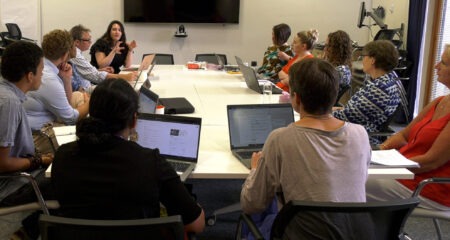
Case study: bringing organisations together
Since our initial commission for the Medicines and Healthcare products Regulatory Agency (MHRA), we’ve convened over 60 stakeholders across science, law, regulation, and ethics to build consensus on complex health data and AI issues. Our report, Are synthetic health data ‘personal data’?, synthesised a comprehensive review of legal frameworks and commentary. We then brought together senior regulatory and industry leaders to explore evolving regulations for computer-modelled evidence in clinical trials, building bridges for crucial conversations. We demonstrated our abilities to build common ground by developing a report on the regulatory considerations of synthetic data standards and facilitating a workshop for the MHRA’s AI Airlock project on post-market incident monitoring for AI system failures. Our structured, collaborative approach turns diverse viewpoints into actionable outputs, advancing regulation and understanding of synthetic data and AI.
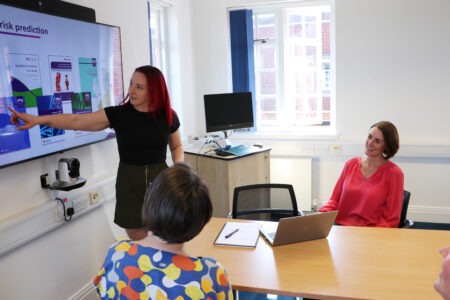
Case study: influencing innovation policy for the NHS
The Innovation Ecosystem Programme, led by Roland Sinker, commissioned the PHG Foundation to explore the role of the NHS in adopting innovation to promote a shift from a sickness to a prevention health service. Our targeted review of the scientific, ethico-legal and policy literature and datasets pinpointed over forty technologies with the potential to support early diagnosis and/or prevention. After assigning the technologies into broad use categories, for example ‘risk assessment and stratification, we identified the likely setting of the application, time frame, potential benefits and opportunities, and challenges and barriers. Our insights contributed to the November 2020 report to NHS England.

Case study: responding rapidly to the pandemic
In 2019, FIND commissioned PHG to do an analysis of the state of the art in pathogen sequencing for viral haemorrhagic fevers, such as Ebola. But with the rapidly rising threat from COVID-19 we agreed to redirect our efforts toward the landscape of next generation sequencing for SARS-CoV-2. Undertaking in-depth interviews with subject experts and using varied evaluation techniques to assess needs we produced actionable insights to inform decision-making. Our analysis contributed to the development of FIND’s SARS-CoV-2 Genomic Surveillance Capacity Map. Over our five-year relationship, we have supported FIND with sequencing-focused reports that convey a clear picture of the latest in the technology, protocols and global best practice.
Looking for policy expertise for your grant-funded research?
We provide major national and international collaborations with advice, support and leadership on policy, ethics and regulation, as well as evaluations of pilot services.
Research grants today expect programmes to include policy considerations and we have considerable experience in developing funding applications as part of a consortium.
To discuss a potential collaboration or joint funding application email [email protected]